Reversibility and therapeutic feasibility of DNM1L-associated neurodevelopmental disorders
- Author
- Seung Tae Baek
- Journal
- Exp. Mol. Med.
- Date of Publication
- 2026-03
- Original link
Abstract
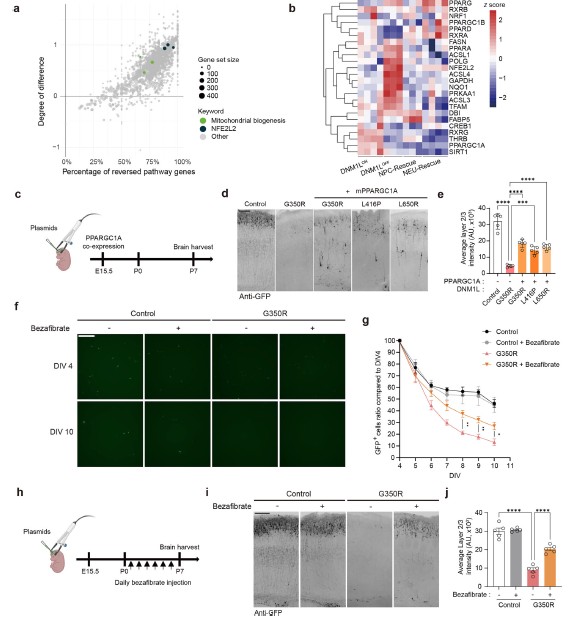
DNM1L-associated encephalopathy is a neurological disorder with a broad spectrum of symptoms associated with mutations in the DNM1L gene. Treatment primarily aims to alleviate symptoms, which is mostly ineffective as the underlying neuropathology is not well understood. Moreover, the progression and reversibility of the molecular pathology across the key developmental and postnatal stages have not been well characterized, which is crucial for identifying the therapeutic window and formulating effective treatment strategies. Here we demonstrated that the expression of DNM1L variants in developing mouse brains caused severe neuronal loss pronounced at the early postnatal stage. Using a human stem cell model with chemogenetic control of DNM1L, we elucidated the neurodevelopmental stage-specific reversibility of transcriptional changes caused by DNM1L dysfunction. Noticeably, more than 75% of the transcriptional landscape associated with pathology can be restored even in differentiated neurons. We validate that a feasible therapeutic strategy targeting one of the reversible pathways, mitochondrial biogenesis, prevents neurodegeneration, suggesting the potential for effective postnatal clinical intervention in DNM1L-associated disorders.
Image